V. After You Launch
How growth works
You’ve launched your product. What now?
Rob Walling once told me, “Making something people want isn’t enough.” It’s true. Once you’ve launched a product, you need a steady stream of individuals lined up to buy it.
I get hundreds of emails from software developers who have built a product but can’t find customers. Why is it so hard?
Markets are noisy
Most markets are filled with noise, and that’s a problem.
Established players are already flooding existing channels with ads, articles, keywords, and social media posts. Your “new thing” is a drop of water in a rushing river: you’re downstream before you know it, and nobody even saw you go.
Rising above that noise and getting noticed is hard.
Your audience isn’t enough
You may already have built up an audience. Maybe you have a beta list, followers on Twitter, and people watching your blog. Awesome! That’s an important first step.
However, if you want real market share, sending a tweet to a few hundred followers is not going to cut it.
“Having an audience is a nice kick starter. But then what? At some point, you have to learn other marketing skills, or you’ll plateau.”
— Rob Walling,
If you’ve built a high-quality product, you need to hook it up to the fastest engine possible: an engine that’s able to connect you to the right markets.
Find a bigger, faster engine
That’s what Josh Pigford, of Baremetrics, did when he hooked up with Buffer.
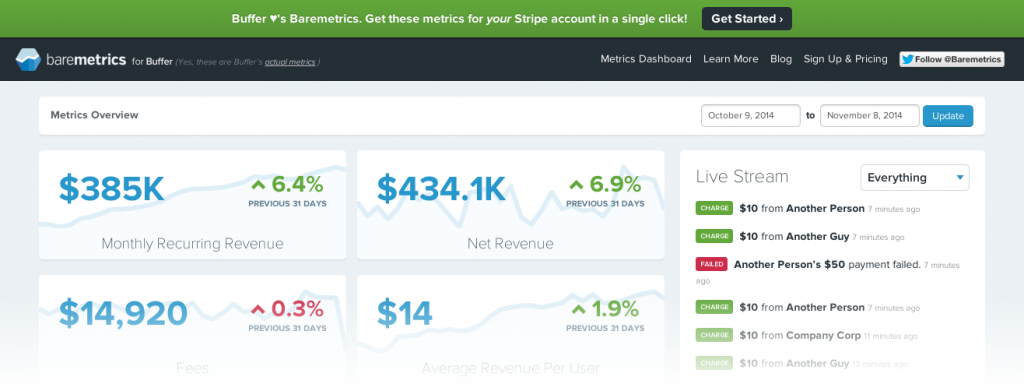
In 2014, Baremetrics and Buffer teamed up to offer open financial analytics
Josh has a product that provided SaaS applications with an automatic revenue dashboard. Buffer has built a huge audience through their content marketing efforts (they have over 1 million users and 240,000 followers on Twitter).
A big part of Buffer’s marketing strategy is their transparency. They share everything: equity, salaries, pricing, fundraising, valuations.
Josh offered Buffer something new, a way to make their revenue metrics public: buffer.baremetrics.io. This provided great PR (and growth) for both parties.
In the seven days following the Buffer partnership, Josh increased the number of paying customers for Baremetrics by 27%.
Piggyback off another audience
Getting a piggyback is super helpful if you’re a toddler and you’re going on a big hike. On your parents’ shoulders, you can cover way more distance than you could on your own.
The same goes for apps.
Here’s an example: Hipstamatic and Instagram. Both offered a similar user experience: take a photo, and apply a filter. The difference was that Instagram hopped on Twitter’s social graph. Users were able to sign up, instantly connect with the same people they followed on Twitter, and then tweet the photos they made on Instagram. Twitter hadn’t introduced image sharing yet, so Instagram became the de facto service.
Parneet Gosal described this on PSFK:
On launch day, Twitter creator Jack Dorsey tweeted about it to his million+ followers. [But] having influential friends who know about your new service isn’t enough. As co-founder Kevin Systrom disclosed at TechCrunch Disrupt NYC, Instagram’s open social network and integration with other social sites have gone a long way in making it popular. [Users could] share their Instagram photos on Facebook, Twitter, and Flickr.
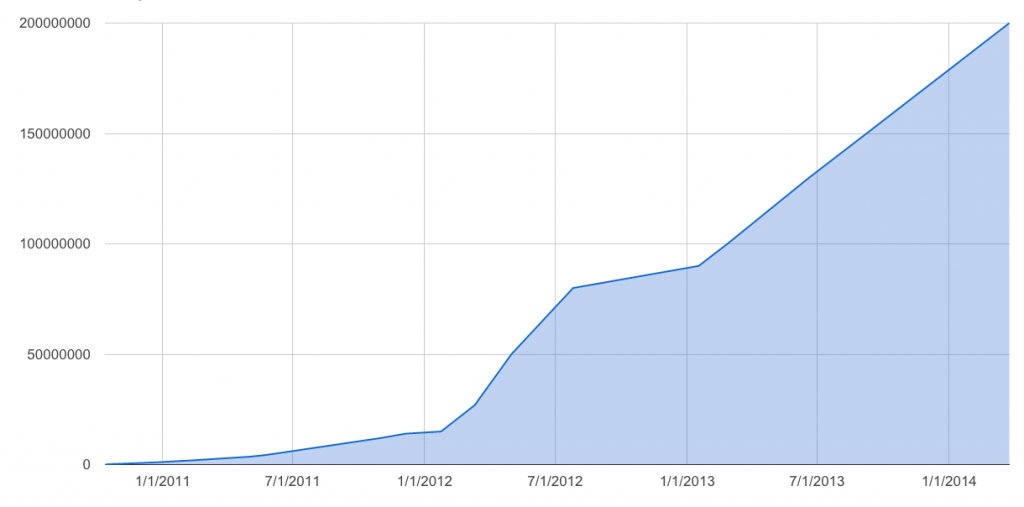
Instagram’s user growth
Put simply, Instagram was able to grab users from Twitter. This is a big reason Twitter shut down API access to Instagram:
“We understand that there’s great value associated with Twitter’s follow graph data, and we can confirm that it is no longer available within Instagram.”
- Twitter spokesperson, Carolyn Penner, July 2012
Piggybacking is using someone else’s user graph. It’s integrating with a platform where users already have social connections and are importing those links into your app.
Catch the big waves
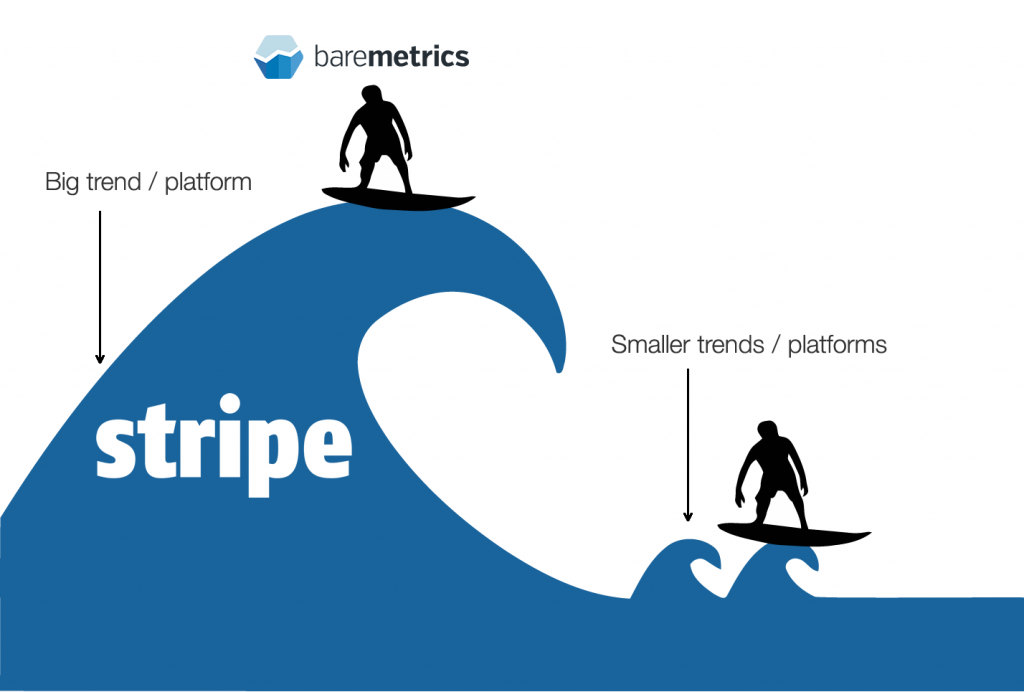
Baremetrics capitalized on an emerging trend: startups were increasingly using Stripe
Let’s go back to my first example.
The other thing that helped Baremetrics was catching a big wave, in this case, the growing popularity of the Stripe platform.
A big wave is a significant trend or platform that comes rolling in like a giant swell. Stripe bubbled up in the developer community and eventually turned into a tsunami: it became the tool of choice for integrating payments into your web application.
Focusing specifically on Stripe allowed Josh to connect with the thousands of developers who were excited about that ecosystem. Yes, PayPal might have more users, but Stripe has momentum. You need the right timing to connect with a big wave; if you miss your window, the wave will be much smaller. Since Josh launched Baremetrics, many copycats have emerged, but they haven’t had near the same traction.
How do you identify big waves? You stay vigilant. What are people talking about on Twitter? What are they searching for in Google? What are people talking about with their friends?
Many of us saw Slack, the group chat app, as it gained momentum. Look at this Google Trends report for the terms Slack, Hipchat, and Yammer:

You can see interest in Slack, compared to other business-oriented chat apps, in Google Trends.
The key is to catch the wave while you can. Eventually, the surge will subside, and that channel will no longer be valuable. My friend Kyle Fox put it this way:
It is like a wave: you want to get on while it’s peaking. But only expect to ride it so far. Then, paddle out and catch another.
In summary
Find a speed train
These are the influencers in your industry. Look for the personalities (or brands) that have already built an audience. Hook your freight car to their engine: offer a partnership that benefits both parties.
Piggyback on an existing community
Integrate with platforms, especially those with a social graph. These integrations should allow users to easily import their existing connections from their address book or friends list.
Catch the big waves
Always be researching your niche. Be aware of trends that are building momentum. Take note of what people are talking about at industry events, in forums, and on social media. Observe and react to trends promptly! If you’re too late, you might miss the wave.
Where to start
Not every tactic will work for you. In the following chapter, I’m going to give you a starting point: tactics you can use to acquire your first 100 customers.
Buy the EPUB & PDF to read offline and support the work.
Buy the book — $10